
What’s your cup of tea when you’re feeling under the weather? 🍵🤧
There’s probably a reason your mum ❤️ made you a warm cup of tea every time you were sick as a child. A hot drink soothes a scratchy throat, eases a stuffy nose, keeps you hydrated – and simply holding a warm cup in your hands feels like a hug.
🌿 Curious about which herbs make the best tea? Read my post 20 Best Herbs for Tea – and What Each One Is Good For.
Tea has been used as a cold and flu comforter for centuries, in both European folk medicine and Traditional Chinese Medicine. Many teas contain natural plant compounds with antioxidant, anti-inflammatory and antibacterial properties. But not all teas are created equal – some are especially good when you’re feeling poorly.
Here are my 5 favourite soothing teas – a mix of herbal teas 🌱 and true teas – to help you feel better and get back on your feet. 👇
1️⃣ Peppermint tea 🌿
Just a few sips of peppermint tea can start to make you feel better. The menthol in peppermint leaves has a cooling, slightly numbing effect on the throat and can calm a tickly cough – which is why peppermint is in so many cough drops. Breathing in the steam can also help you feel less blocked up.
Best for: sore throat, cough and a stuffy nose.
2️⃣ Ginger tea 🫚
Fresh ginger root tea is a warming, spicy elixir and one of the most loved natural cold remedies. Ginger has natural anti-inflammatory properties, and its fiery kick helps open up the sinuses and ease congestion. In TCM, ginger is used to warm the body and “chase out the cold”.
Best for: chills, congestion, a queasy stomach.
3️⃣ Chamomile tea 🌼
Chamomile is the perfect tea when you need rest. It contains a natural antioxidant called apigenin, which binds to receptors in the brain that help you relax and feel sleepy. Exactly what you need when a sore throat and blocked nose keep you awake at night.
Best for: rest, relaxation and better sleep while you recover.
4️⃣ Nettle tea 🌱
Yes – the same spiky plant that stings hikers and cyclists! While the fresh plant can burn and itch when you touch its tiny hairs, dried nettle makes a mild, earthy tea. Nettle contains vitamin C, carotenoids and minerals such as iron and magnesium, and has traditionally been used to support the body and ease inflammation.
Best for: a nourishing, mineral-rich boost.
5️⃣ Echinacea tea 🌸
Echinacea (purple coneflower) is one of the most popular herbs for colds and flu. Some studies suggest it may help reduce the inflammation behind a stuffy nose and sore throat, and may shorten a cold slightly when taken at the first signs – although research results are mixed. Many people swear by it as their first line of defence.
Best for: the very first tickle in your throat.
My cold-comfort tea recipe: Honey, Lemon & Ginger 🍯🍋
When I feel a cold coming on, this is the first thing I make. It’s warming, soothing and so simple.
Ingredients (1 large mug)
- 🫚 3–4 thin slices of fresh ginger (about 2 cm)
- 🍋 Juice of ½ lemon, plus a slice for the cup
- 🍯 1–2 teaspoons raw honey
- 🌿 Optional: a few fresh mint leaves, 1 cinnamon stick or a pinch of turmeric
- 💧 300 ml water
Instructions
1️⃣ Simmer the ginger
Bring the water and ginger slices to the boil, then let them simmer gently for 10 minutes. The longer you simmer, the spicier it gets.
2️⃣ Strain and cool slightly
Pour into your favourite mug and let it cool for a minute or two.
3️⃣ Add lemon and honey
Stir in the lemon juice and honey. Adding the honey when the tea is warm rather than boiling helps keep its lovely flavour.
4️⃣ Sip slowly
Wrap yourself in a blanket, breathe in the steam, and sip. Enjoy 2–3 cups a day while you recover. 💛
Tips for the perfect healing cup ✨
- Cover your tea while it steeps so the precious essential oils stay in the cup.
- Use fresh herbs when you can – mint, ginger and nettle are easy to grow or find.
- Drink plenty – staying hydrated is one of the most important things when you’re ill.
- Rest! Tea helps, but your body heals best when you give it time to sleep and recover.
A little note of care 🌿
Herbal teas are a comforting support, not a cure. See a doctor if you have a high fever, difficulty breathing, symptoms that last more than 10 days, or if you feel very unwell. Never give honey to babies under 1 year old. Avoid echinacea and chamomile if you are allergic to plants in the daisy family, and check with your doctor before using herbal teas if you are pregnant, breastfeeding or take medication – nettle in particular can interact with blood thinners, blood pressure medication and diuretics. Peppermint can worsen heartburn in some people.
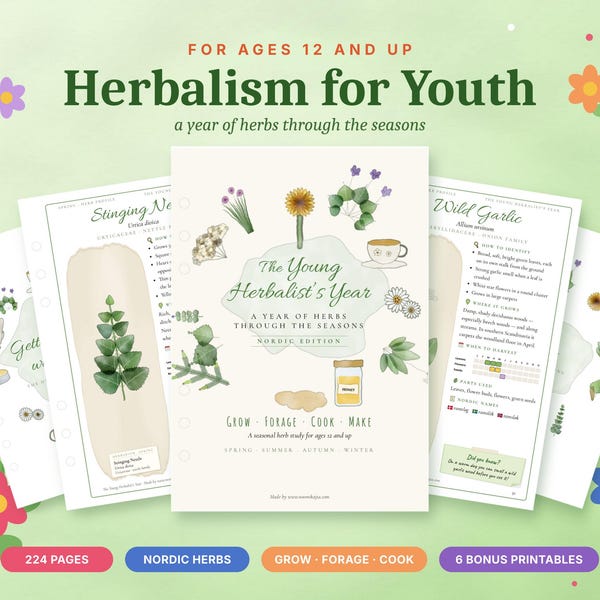
🛍️ From my Etsy shop
The Young Herbalist’s Year
A printable herb study for curious young minds – learn about herbs, teas and plants through the seasons.
So – what’s your cup of tea? Tell me your favourite and tag me #NoomiKajsa 🍵
With love from Bornholm,
Noomi Kajsa