
As an acupuncturist, Traditional Chinese Medicine (TCM) is close to my heart. Alongside acupuncture, herbs have been the backbone of TCM for more than 2,000 years. 🌿
In TCM, herbs are rarely used alone. They are combined in formulas that are tailored to your constitution – but it is lovely to get to know the “stars”. Here are 15 of the most loved.
The 15 herbs
- Ginseng (Ren Shen) – the king of tonics. Traditionally used for energy, stamina and recovery.
- Astragalus (Huang Qi) – strengthens Qi and the body’s defences; a winter favourite.
- Goji berry (Gou Qi Zi) – nourishes the Liver and Kidneys; said to brighten the eyes.
- Licorice root (Gan Cao) – the “great harmoniser”, found in many formulas.
- Ginger (Sheng Jiang / Gan Jiang) – warming; traditionally used for digestion and nausea.
- Cinnamon (Gui Zhi / Rou Gui) – warms the body and supports circulation.
- Dong Quai (Dang Gui) – the “female ginseng”, used to nourish the blood.
- Schisandra (Wu Wei Zi) – the “five-flavour berry”, used for stress, focus and the Liver.
- Reishi (Ling Zhi) – the mushroom of immortality; calms the Shen (spirit).
- Chrysanthemum (Ju Hua) – a cooling flower tea for tired eyes and heat.
- Red dates / jujube (Da Zao) – sweet and nourishing; calms the mind.
- Codonopsis (Dang Shen) – a gentler, everyday alternative to ginseng.
- White peony root (Bai Shao) – nourishes the blood and soothes the Liver.
- Poria (Fu Ling) – a mushroom that supports digestion and drains dampness.
- Turmeric (Jiang Huang) – moves Qi and blood; known worldwide for its golden colour.
Easy ways to start
- Goji & red date tea: a small handful of goji berries and 3–4 sliced red dates in hot water – sweet, warming and lovely in winter.
- Chrysanthemum tea: 5–6 dried flowers in a cup of hot water for a cooling afternoon tea.
- Ginger & cinnamon: a few slices of fresh ginger and a cinnamon stick, simmered for 10 minutes.
How Chinese herbs are used
In TCM, herbs are classified by their nature (cold, cool, neutral, warm, hot), their taste (sweet, sour, bitter, pungent, salty) and the organs they affect. A practitioner looks at your tongue, pulse and symptoms and chooses a formula that balances your whole pattern – not just a single complaint.
Forms of Chinese herbs
- Raw herbs – boiled into a strong decoction; the most traditional form.
- Granules – concentrated powders that dissolve in hot water.
- Patent pills – classic formulas in small tablets, easy to take.
- Food herbs – goji, red dates, ginger, cinnamon and Chinese yam can be used in everyday cooking.
A nourishing winter soup
Simmer chicken or vegetable stock with 3 slices of ginger, 6 red dates, a handful of goji berries, 2 slices of astragalus root and some mushrooms for 45 minutes. Remove the astragalus slices, add greens and enjoy a warming, strengthening bowl.
FAQ
Can I combine Chinese herbs with acupuncture?
Yes – they are often used together in TCM and support each other.
How long does it take to feel a difference?
Food herbs work gently over weeks; a practitioner’s formula is usually reviewed every 1–2 weeks.
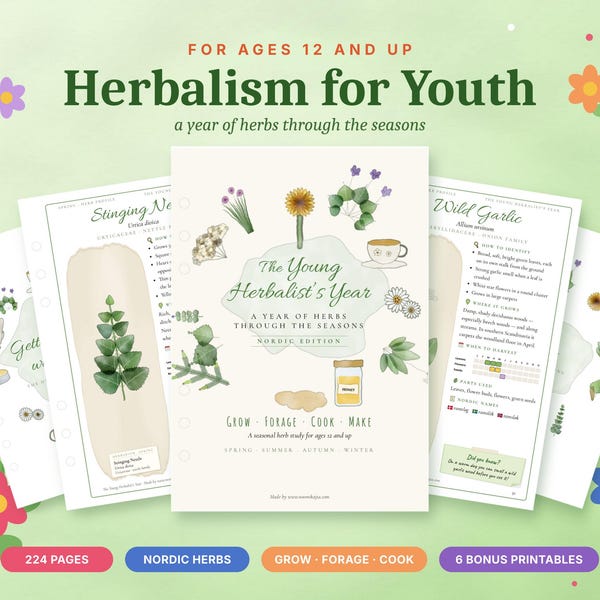
🛍️ From my Etsy shop
The Young Herbalist’s Year
A printable herb study through the seasons – grow, forage, cook and make with herbs.
Have you tried any Chinese herbs? Tag me #NoomiKajsa 🌿
Read more: Acupuncture · Herbs & Remedies