
Adaptogens are one of the biggest words in natural health right now – in coffee, gummies, chocolate and teas. But what are they really, and how do you use them wisely? 🌿
What is an adaptogen?
An adaptogen is a herb or mushroom that is said to help the body adapt to stress and find its balance again – calming you when you are wired, and supporting you when you are drained. The term was coined in 1947 by the Russian scientist Nikolai Lazarev and studied further by Israel Brekhman, who researched Siberian ginseng and rhodiola for soldiers, athletes and cosmonauts.
Most adaptogens have been used for centuries in Ayurveda, Traditional Chinese Medicine and Nordic folk medicine – long before they had a modern name.
My 10 favourite adaptogens
- Ashwagandha – the calming Ayurvedic root. Best in the evening; traditionally used for stress, sleep and steady energy.
- Rhodiola (roseroot) – a Nordic mountain plant for mental tiredness and focus. Best in the morning.
- Holy basil (tulsi) – the “queen of herbs”; a lovely everyday tea for body and mind.
- Siberian ginseng (eleuthero) – for stamina and long, busy days.
- Panax ginseng – the classic energy tonic. Strong – use in short periods.
- Schisandra – the “five-flavour berry” for focus and the liver.
- Maca – a Peruvian root for energy and hormonal balance; nutty in smoothies.
- Reishi – the calming mushroom for evening rest.
- Cordyceps – loved by athletes for stamina and breathing.
- Licorice root – supports tired adrenals in TCM; use only for short periods.
How to use adaptogens
- Start with one. Try one adaptogen for 2–4 weeks before adding another, so you can feel what it does.
- Match the time of day: energising ones (rhodiola, ginseng, cordyceps, maca) in the morning – calming ones (ashwagandha, reishi, holy basil) in the evening.
- Take breaks. A common rhythm is 6–8 weeks on, then 1–2 weeks off.
- Choose your form: tea, powder in a smoothie or warm milk, tincture or capsules. Look for organic, tested products with the plant part and amount on the label.
- Don’t forget the basics. Adaptogens are helpers – sleep, daylight, movement, good food and kind people are still the real foundation.
An easy start: calming moon milk
Warm 1 cup of oat or almond milk with ½ tsp ashwagandha powder, ½ tsp cinnamon, a pinch of cardamom and 1 tsp honey. Whisk, sip slowly – and go to bed. 🌙
Which adaptogen suits you?
- Wired and tired, poor sleep: ashwagandha or reishi in the evening.
- Brain fog and afternoon slump: rhodiola or schisandra in the morning.
- Long, demanding days: Siberian ginseng or cordyceps.
- Everyday calm: holy basil tea.
- Low energy and hormonal ups and downs: maca in a smoothie.
Adaptogen recipes
- Morning focus smoothie: banana, berries, 1 tsp maca, ¼ tsp rhodiola powder and oat milk.
- Tulsi iced tea: steep holy basil with lemon and a little honey, then chill.
- Reishi hot chocolate: cocoa, oat milk, ½ tsp reishi and cinnamon.
Adaptogens in Nordic tradition
Rhodiola rosea (rosenrod) grows wild on the coasts and mountains of Scandinavia, and the Vikings were said to use it for strength and endurance. Siberian ginseng has a long history in Russia and Northern Europe for cold, dark winters.
FAQ
How long before I notice a difference?
Some feel rhodiola within days; ashwagandha often takes 2–6 weeks of regular use.
Can I take adaptogens with coffee?
Calming ones are fine; energising ones plus lots of coffee can make you jittery.
🛍️ From my Etsy shop
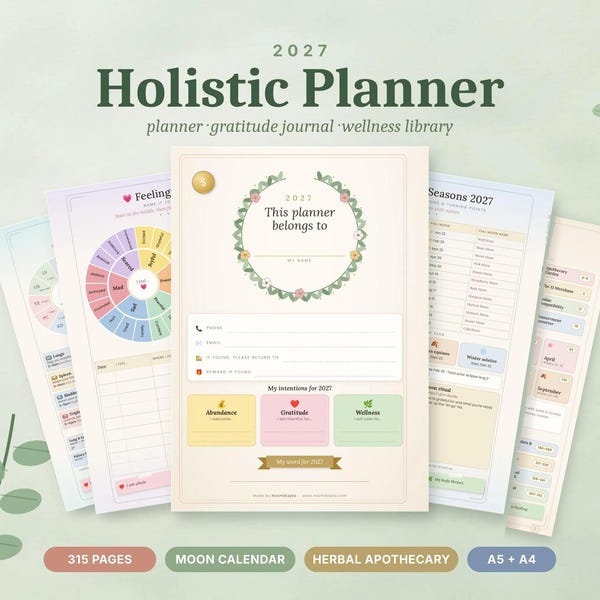
Holistic Planner 2027
A printable A5 planner for body and soul – mood and habit tracker, gratitude journal and herbal apothecary pages.
Which adaptogen would you like to try? Tag me #NoomiKajsa 🌿
Read more: Medicinal Mushrooms (+ Ashwagandha) · Top 15 Chinese Herbs