
Most of us have no idea how much omega-3 we actually have in our body. We think we eat enough fish, we hope our supplement works – but we are guessing. The good news is that you don’t have to. With a small finger-prick blood test you can see your exact fatty acid balance in black and white. That is the idea behind “Test – don’t guess” – and the Zinzino BalanceTest. 🌿
Why test instead of guess?
Omega-3 deficiency doesn’t hurt and it doesn’t show. You can feel completely fine while your cells are running on far too much omega-6 and far too little omega-3. Our modern diet – full of sunflower oil, corn oil, processed food, grain-fed meat and very little oily fish – has pushed the balance far away from what our body was built for.
A test gives you three things a guess never can:
- A starting point – where are you right now?
- A goal – what should your numbers be?
- Proof – did your changes in food and supplements actually work?
Why the balance between omega-6 and omega-3 matters
Omega-6 and omega-3 are both essential – your body can’t make them, so they must come from food. They are not enemies; we need both. The problem is the balance. They compete for the same enzymes and the same place in your cell membranes.
- Omega-6 (especially arachidonic acid, AA) is the raw material for signalling substances that help start an inflammation – your body’s alarm and repair system.
- Omega-3 (EPA and DHA) is the raw material for substances that help calm and resolve the inflammation again when the job is done.
When omega-6 dominates massively, the “on” switch gets much more fuel than the “off” switch. Researchers believe our ancestors ate a ratio of roughly 1:1 to 4:1, while many people today are at 10:1, 15:1 or even higher. EPA and DHA also help build soft, flexible cell membranes – important for the heart, brain, eyes and every single cell in the body.
I explain the ratio and the foods behind it in more depth in The Omega-6 to Omega-3 Ratio – here we focus on how you can measure it.
What is the Zinzino BalanceTest?
The BalanceTest is a dried blood spot (DBS) test you take at home. You put a few drops of blood from your fingertip on a small filter card, let it dry and send it by post to the lab. The test is:
- Analysed by VITAS Analytical Services, an independent laboratory in Oslo, Norway – Zinzino does not test your blood themselves.
- Certified according to the European regulation 98/79/EC on in-vitro diagnostic medical devices.
- Anonymous – your result is linked to a Test ID, not your name.
- Part of the world’s largest database of dried blood spot fatty acid tests, with hundreds of thousands of samples analysed.
What does the test measure?
The lab measures 11 fatty acids in your whole blood. Together they make up about 98% of the fatty acids in the blood, and each is shown as a percentage of the total.
- Saturated fats: palmitic acid and stearic acid
- Omega-9: oleic acid
- Omega-6: linoleic acid, gamma-linolenic acid (GLA), dihomo-gamma-linolenic acid (DGLA) and arachidonic acid (AA)
- Omega-3: alpha-linolenic acid (ALA), EPA, DPA and DHA
Your 6 results – and the target values
| Marker | What it shows | Target |
|---|---|---|
| Protection Value | A score from 0–100 combining your omega-6 ratio, omega-3 level and balance. | Above 90 |
| Omega-3 Index | EPA + DHA as a percentage of all fatty acids. | At least 8% |
| Omega-6:3 Balance | Arachidonic acid (AA) divided by EPA. | Below 3:1 |
| Cell Membrane Fluidity | Saturated fats compared to EPA + DHA – how soft or stiff your cell membranes are. | Below 4:1 |
| Mental Strength | AA compared to EPA + DHA – the omega supply to brain and nervous system. | Below 1:1 |
| AA Index | Your level of arachidonic acid – we need some, not too much and not too little. | 6.5–9.5% |
If you fill in the short questionnaire about your food and lifestyle, you get the full report with personal guidance. Without it, you only see your balance score.
How to take the test – step by step
- Wash and dry your hands – warm hands give better blood flow.
- Prepare the card. Tear off the “SAVE” part with your Test ID and take a photo of it – you need it to see your results.
- Clean your fingertip (the middle finger is recommended) with the alcohol wipe, then swing your arm in big circles for about 20 seconds.
- Prick the side of your fingertip with the single-use lancet – it clicks and it’s over.
- Let the drops fall – at least 3 free-falling drops into each circle, without touching the paper.
- Let it dry flat for at least 10 minutes.
- Pack and post – card in the paper envelope, then the foil bag (keep the little drying bag inside), then the envelope to the lab.
- Register your Test ID at zinzinotest.com and answer the questionnaire.
Your results are usually ready 10–20 days after the lab receives your sample.
Test, change, test again
A single test is a snapshot. The real power is in the before and after. Your red blood cells live for about 120 days, so it takes around 4 months for changes in your diet to show fully in your blood. That is why the second test is taken after 120 days.
- Test 1: find your starting point – order the BalanceTest here.
- Change: more oily fish, less omega-6-rich seed oils and processed food – and a good omega-3 with plenty of EPA and DHA.
- Test 2 after 120 days: see what actually happened.
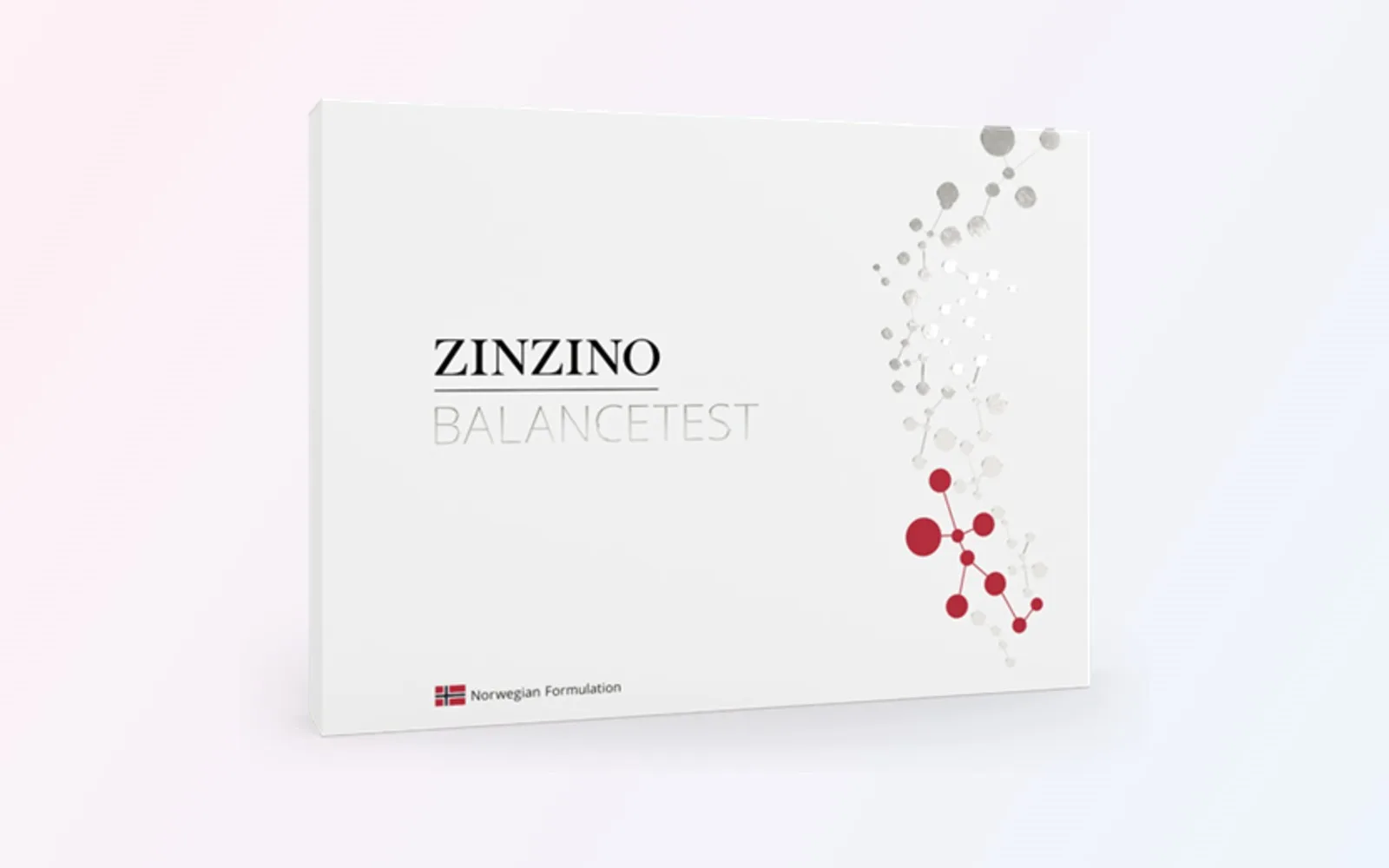
🩸 Take the Zinzino BalanceTest
The BalanceTest is a simple at-home dried blood spot test. A few drops from your fingertip are analysed by the independent laboratory VITAS in Norway, and you get your personal omega-6:3 balance, Omega-3 Index and more. It is also sold in a kit together with BalanceOil+, with one test at the start and one after 120 days, so you can see your before and after.
I am an independent Zinzino partner and may earn a commission from this link.
How to improve your balance – the short version
- Eat oily fish 2–3 times a week – salmon, mackerel, herring, sardines. See my Nordic omega-3 recipes.
- Cut down on omega-6-heavy oils like sunflower, corn and soybean oil – read more in my post on cooking oils.
- Choose olive oil, butter or coconut oil for everyday cooking.
- Limit processed food, crisps, fried food and ready-made dressings.
- Choose grass-fed meat and free-range eggs when you can – they have a better fat profile.
- Choose a quality omega-3 – see How to Choose a Good Fish Oil.
FAQ
Does it hurt?
Just a tiny prick – like a quick pinch. Most people are surprised how easy it is.
Do I need to fast before the test?
No, you can take it at any time of the day.
Is my data private?
Yes – the sample is linked to an anonymous Test ID.
I eat fish every week. Do I still need to test?
Many people who eat fish regularly are still surprised by their numbers, because omega-6 from the rest of the diet pushes the balance. The only way to know is to test.
Is the test a medical diagnosis?
No – it shows your fatty acid profile. It doesn’t diagnose any disease.
Want to dive deeper? Download my free eBook The Truth About Omega-3. 📖
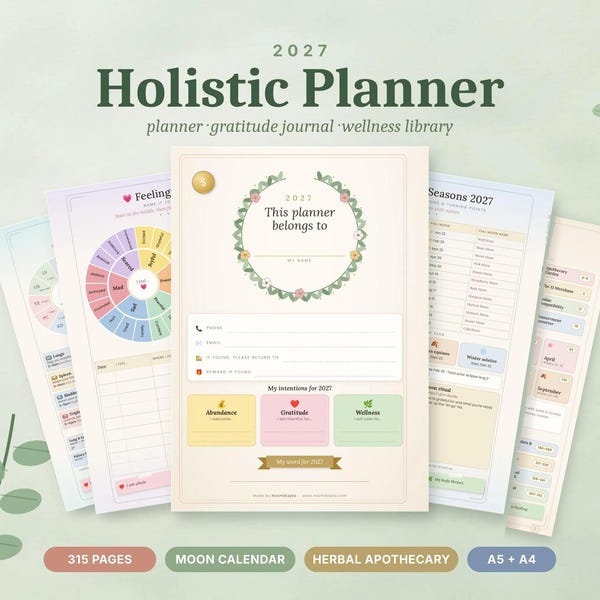
🛍️ From my Etsy shop
Holistic Planner 2027
A printable A5 planner for body and soul – with habit tracker, mood tracker and gratitude pages to follow your new omega habits and track your progress between tests.
Have you tested your balance? Tag me #NoomiKajsa 🌿
Read more: ALA – Plant Omega-3 · EPA and DHA · Omega-3, Heart and Inflammation · Omega-3, Brain and Mood