
What if you could lie down for 20 minutes and get up feeling like you had a long, deep rest? That is the promise of yoga nidra – often called “yogic sleep”. You don’t need to be flexible, you don’t need any experience, and you do it lying completely still. Perfect for tired bodies and busy minds. 💜
What is yoga nidra?
Yoga nidra is a guided relaxation where you lie on your back and follow a voice – or your own memory – through a series of steps: setting an intention, scanning the body, noticing the breath, feeling opposites and resting in calm awareness. The aim is to reach the state between awake and asleep, where the body is deeply relaxed while a small part of the mind is still listening.
A similar, simpler practice is the body scan, used in mindfulness programmes all over the world.
Why it helps
- It switches on the rest-and-digest system. Heart rate and breathing slow down, and muscles let go.
- It calms a busy mind. Following simple instructions gives the thoughts something gentle to hold on to.
- It can help you fall asleep. Many people use it in bed and never hear the end of the practice.
- It works as a “power nap” in the afternoon without the grogginess of a long sleep.
- Studies suggest it can lower stress and anxiety and improve sleep quality when practised regularly.
A simple 20-minute yoga nidra
- Get comfortable (2 min). Lie on your back with a pillow under your knees and a blanket over you. Close your eyes.
- Set an intention (1 min). A short, positive sentence in the present tense – “I am calm and safe” or “I sleep deeply”.
- Body rotation (6 min). Move your attention quickly and lightly through the body: right thumb, index finger, middle finger… right palm, wrist, elbow, shoulder… and so on, the right side, then the left side, the back, the front and the head. Just notice – don’t move.
- Breath awareness (4 min). Count your breaths backwards from 27 to 1. If you lose count, simply start again.
- Opposites (3 min). Feel heaviness in the whole body… then lightness. Warmth… then coolness. This trains the mind to rest in calm.
- Calm images (2 min). Picture a sunrise, a quiet beach, a candle flame, a field of lavender.
- Repeat your intention and return (2 min). Move fingers and toes, roll to the side and slowly sit up – or simply drift into sleep.
A 5-minute body scan in bed
Breathe out slowly. Feel your feet – let them be heavy. Feel your legs, your hips, your belly rising and falling. Let your shoulders melt down, your jaw soften, your forehead smooth out. Imagine a warm wave of light moving slowly from your toes to the top of your head. If thoughts come, notice them and come back to the body.
Tips
- Use a guided recording at first – there are many free ones.
- It’s fine to fall asleep. Your body still gets the rest.
- Practise at the same time every day for best results – after work, or at bedtime.
- Combine with my breathing techniques or a lavender pillow spray.
🛍️ From my Etsy shop
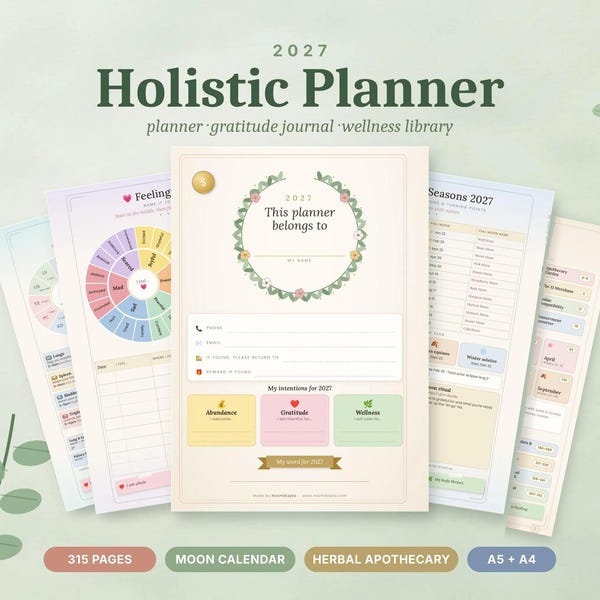
Holistic Planner 2027
A printable A5 planner for body and soul – with habit tracker to build your daily rest practice.
Have you tried yoga nidra? Tag me #NoomiKajsa 🧘♀️
Read more: Sleep and Anxiety · A Gentle Evening Routine · Healing Frequencies