
Bee pollen are the tiny golden, orange and purple granules that honeybees collect from flowers and pack together with a little nectar and saliva. They bring it back to the hive as food for the young bees. For us, it is a colourful, slightly sweet and flowery superfood. 🐝
What does bee pollen contain?
- Protein and free amino acids
- B vitamins and small amounts of other vitamins and minerals
- Plant compounds such as flavonoids and carotenoids – antioxidants
- Natural sugars and a little fat
The content varies a lot depending on which flowers the bees visited.
Traditional uses and what research says
- Energy – bee pollen has long been used as a natural pick-me-up.
- Antioxidants – lab studies show strong antioxidant activity.
- Seasonal support – some people take local bee pollen before spring, but the evidence for allergy relief is weak, and it can also cause reactions.
- Most research is still in the lab or on animals, so enjoy it as a nutritious food rather than a medicine.
How to use bee pollen
- Sprinkle on yoghurt, porridge or smoothie bowls
- Blend into smoothies
- Stir into honey for a golden spread
- Decorate salads and desserts
Start with just a few granules, then slowly build up to about 1 teaspoon a day. Keep it in the fridge or freezer.
Buying tips
Choose bee pollen from a local beekeeper or organic source, with a mix of colours. It should smell sweet and flowery, never musty.
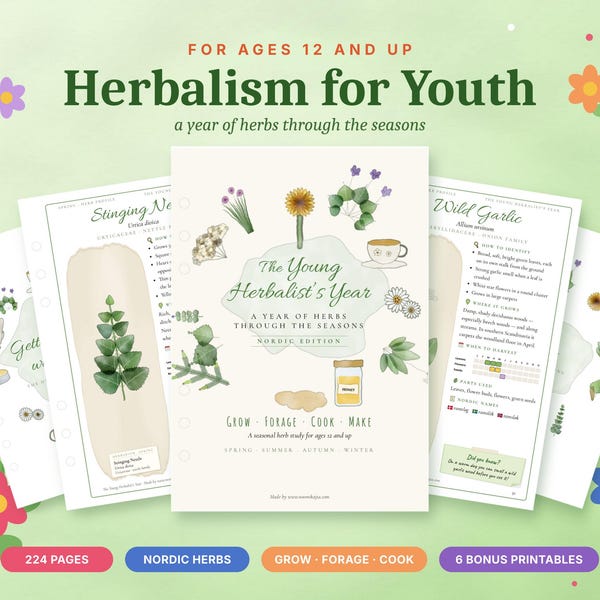
🛍️ From my Etsy shop
The Young Herbalist’s Year
A printable herb study through the seasons – grow, forage, cook and make with nature’s gifts.
Have you tried bee pollen? Tag me #NoomiKajsa 🐝
Read more: Manuka Honey 101 · Adaptogens · DIY Beeswax Wraps