
A herbal infused oil is simply a carrier oil that has soaked up the goodness of herbs. It’s the base for balms, salves, massage oils and lip balms – and one of the easiest herbal preparations to make at home. 🌼
Best herbs to infuse
- Calendula – soothing for dry, irritated skin
- Lavender – calming, for massage and bedtime
- Chamomile – gentle for sensitive skin
- Rosemary – warming, for hair and sore muscles
- Arnica – traditionally for bruises (external use only, not on broken skin)
- St John’s wort – a classic red oil for skin and nerves
- Plantain – for bites and itchy skin
Always use dried herbs – fresh herbs contain water, which can make the oil go mouldy.
Carrier oils
Olive oil (keeps well), sweet almond oil (light), sunflower or jojoba oil.
Method 1: Slow sun infusion (4–6 weeks)
- Fill a clean, dry jar halfway with dried herbs.
- Cover completely with oil, with 2 cm extra on top.
- Stir to remove air bubbles and close.
- Place on a sunny windowsill for 4–6 weeks, shaking every few days.
- Strain through a cloth into a dark glass bottle.
Method 2: Quick warm infusion (2–3 hours)
- Put the herbs and oil in a heatproof bowl over a pan of barely simmering water.
- Keep it gently warm (about 40–50 °C) for 2–3 hours – never let it fry.
- Cool, strain and bottle.
How to use
- As a massage or body oil
- As the base for calendula salve and lip balm
- In bath salts and scrubs
Label with the herb, oil and date. Most infused oils keep about 1 year in a cool, dark place.
Please note: Do a patch test before use. St John’s wort oil can make skin more sensitive to sun and interacts with many medications if taken internally. Arnica is for external use only. Throw away any oil that smells rancid or shows mould.
🛍️ From my Etsy shop
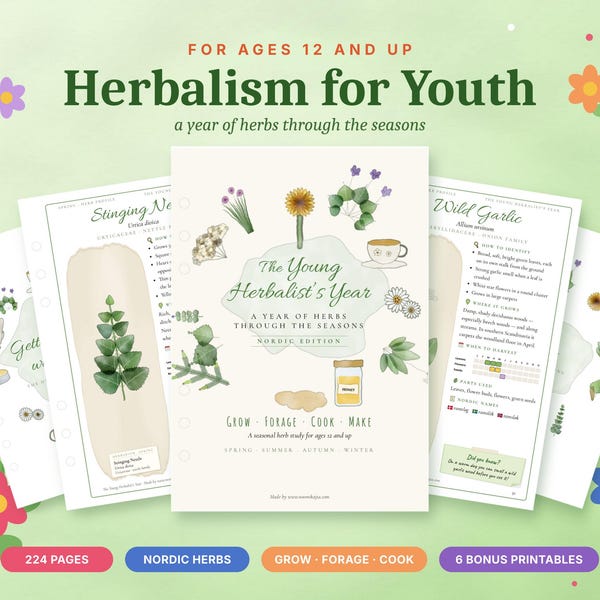
The Young Herbalist’s Year
A printable herb study through the seasons – grow, forage and make your own herbal oils and balms.
Tag me #NoomiKajsa 🌼
Read more: Your Herbal First-Aid Kit · Herbal Tinctures · Herbal Syrups