We breathe around 20,000 times a day – and almost never think about it. Yet the breath is the one part of our nervous system we can steer ourselves. Change the way you breathe, and within a minute you can change how you feel: calmer, more awake, more focused or ready for sleep. 🌬️
In this guide I share the breathing techniques I use myself and with my clients – from simple everyday calm to Nordic cold-morning energy.
Why breathing changes how we feel
Your nervous system has two main modes: the sympathetic “fight or flight” mode and the parasympathetic “rest and digest” mode. Fast, shallow breathing high in the chest tells the body there is danger. Slow breathing with a long out-breath stimulates the vagus nerve, slows the heart and tells the body: you are safe.
Slow breathing at around 5–6 breaths a minute has been studied for stress, blood pressure and heart rate variability, and the results are encouraging. In Traditional Chinese Medicine, the breath moves Qi, and in yoga it is called prana – life force. Old wisdom and new science agree: the breath is medicine you always carry with you.
First: are you breathing well?
Put one hand on your chest and one on your belly and breathe normally. Which hand moves most? Many of us breathe mostly in the chest – especially when stressed or sitting at a desk all day. A relaxed breath moves the belly and lower ribs, goes in and out through the nose, and is quiet and soft.
1. Belly breathing (diaphragmatic breathing)
The foundation for all other techniques.
- Lie on your back with your knees bent, or sit comfortably.
- Place one hand on your belly and one on your chest.
- Breathe in slowly through your nose and let your belly rise – the chest hand stays almost still.
- Breathe out slowly through your nose or soft lips and feel the belly fall.
- Practise for 5 minutes a day.
2. 4-7-8 breathing – for sleep
Developed by Dr Andrew Weil, inspired by yoga breathing.
- Breathe in quietly through the nose for 4.
- Hold the breath for 7.
- Breathe out completely through the mouth with a soft “whoosh” for 8.
- Repeat four rounds. Lovely in bed or when you wake up at night.
3. Box breathing – for focus and calm under pressure
Used by athletes, nurses and even military pilots.
Breathe in for 4 – hold for 4 – breathe out for 4 – hold for 4. Imagine drawing the four sides of a square. Do 4–6 rounds before a meeting, an exam or a difficult conversation.
4. Coherent breathing – the everyday reset
Breathe in for 5–6 seconds and out for 5–6 seconds – about six breaths a minute. Many free apps and YouTube videos have a gentle “breathing pacer” to follow. Ten minutes a day is a wonderful habit for stress, mood and heart.
5. The physiological sigh – the fastest calm
Take a full breath in through the nose, then a second short sniff on top to fill the lungs completely, and let it all out slowly through the mouth. One to three of these sighs can calm you in under a minute. We actually do this naturally when we cry or before falling asleep.
6. Alternate nostril breathing (Nadi Shodhana)
A classic from yoga for balance and a clear mind.
- Sit tall. Close your right nostril with your right thumb and breathe in through the left.
- Close the left nostril with your ring finger, open the right and breathe out through the right.
- Breathe in through the right, close it, and breathe out through the left.
- That is one round. Continue for 3–5 minutes, slowly and softly.
7. Humming bee breath (Bhramari)
Breathe in through the nose, then breathe out while humming softly like a bee, with your lips closed. You can gently close your ears with your thumbs. The vibration is deeply soothing – and humming increases nitric oxide in the nose, which helps open the airways. Lovely before meditation or sleep.
8. Energising breath – for tired mornings
Stand by an open window, breathe in deeply through the nose while lifting your arms over your head, and breathe out through the mouth while letting them fall. Repeat 10 times. Fresh Nordic air and a few strong breaths wake you up better than a second coffee! ☀️
Which technique when?
- Can’t fall asleep: 4-7-8 or humming breath
- Sudden stress or panic: physiological sigh, then belly breathing
- Before a meeting or exam: box breathing
- Daily stress care: 10 minutes of coherent breathing
- Feeling scattered: alternate nostril breathing
- Tired and sluggish: energising breath by an open window
Breathing and acupressure
As an acupuncturist, I love combining breath with these points:
- Shanzhong (CV17) – in the middle of the breastbone, level with the nipples. Rest your fingertips here while you breathe slowly to open the chest and ease tension.
- Neiguan (PC6) – three finger-widths above the inner wrist crease, between the tendons. Calms anxiety and nausea.
- Lung 1 (Zhongfu) – just below the outer end of the collarbone. Gentle pressure while breathing deeply.
Build a 5-minute daily breathing habit
- Pick a fixed moment – after brushing your teeth, before lunch or in bed.
- Sit or lie comfortably and set a gentle timer for 5 minutes.
- Start with 1 minute of belly breathing.
- Continue with 3 minutes of coherent breathing (in 5, out 5).
- Finish with 3 physiological sighs and notice how you feel.
- Write one word about your mood in your journal or planner.
Common mistakes
- Forcing it. The breath should feel soft and comfortable – never strained.
- Breathing too much. Calm breathing is slow and quiet, not big and dramatic. If you feel dizzy or tingly, stop and breathe normally.
- Mouth breathing. Breathe through your nose whenever you can – it warms, filters and slows the air.
- Waiting until you are stressed. Practise when you are calm, and the technique will be there for you when you need it.
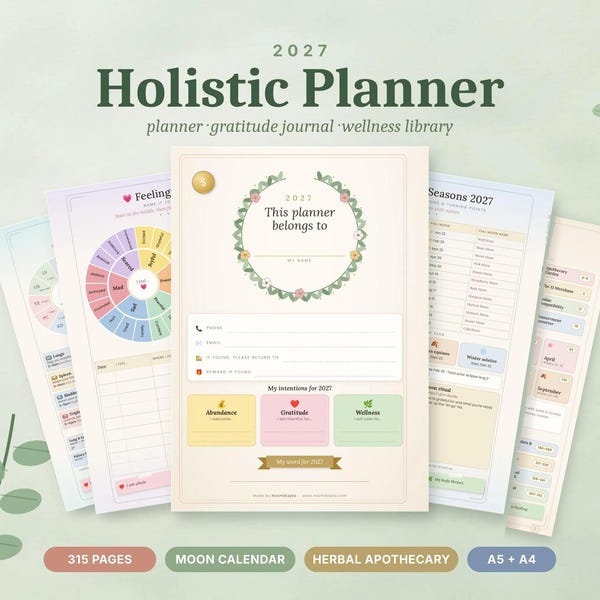
🛍️ From my Etsy shop
Holistic Planner 2027
A printable A5 planner for body and soul – mood and habit tracker, gratitude journal and herbal apothecary pages.
Which breathing technique will you try first? Tag me #NoomiKajsa 🌬️
Read more: A Gentle Evening Routine for Deep Sleep · 10 Calming Herbal Teas · Acupressure – Treat Yourself