
Anxiety is a completely natural feeling. It is the body’s way of saying “pay attention” – a racing heart before an exam, butterflies before a big conversation. A little of it keeps us sharp.
But when the worry never switches off – when it follows you to bed, tightens your chest and steals your joy – it is time to be extra kind to yourself. One of my favourite gentle helpers is something you probably already have in the kitchen: a warm cup of herbal tea. 🍵
What happens in the body when we feel anxious?
When we feel threatened, the nervous system shifts into “fight or flight”. Stress hormones rise, breathing gets faster and the muscles tense. That is perfect if you need to run from danger – but not when the “danger” is an inbox or a to-do list.
Calming rituals help the body shift back into “rest and digest”. And making tea is a ritual in itself: boiling the water, breathing in the steam, holding the warm cup with both hands.
My 10 favourite calming teas
- Chamomile – the classic. Soft, apple-like and wonderfully soothing in the evening.
- Lemon balm – fresh and lemony, traditionally used to lift the mood and calm a restless mind.
- Lavender – a few flowers go a long way. Lovely mixed with chamomile.
- Passionflower – a gentle herb for busy thoughts, especially before bed.
- Valerian root – earthy and strong; best kept for the evening.
- Peppermint – cooling and refreshing, and kind to a nervous tummy.
- Holy basil (tulsi) – used in Ayurveda for centuries to help the body handle stress.
- Linden flower – honey-scented and soft; a Nordic favourite.
- Rose petals – pure comfort for the heart. Beautiful with a little green tea or on their own.
- Rooibos – caffeine-free, naturally sweet and grounding.
How to make your calming cup
- Use 1–2 teaspoons of dried herbs per cup.
- Pour over hot (not boiling) water and cover the cup, so the precious oils stay in.
- Steep for 5–10 minutes, strain and sip slowly.
- Make it a moment: put the phone away, breathe in the steam, and take three slow breaths before the first sip.
Common signs of anxiety
- Racing heart, tight chest or shallow breathing
- Restlessness and difficulty sitting still
- Worried thoughts that go round and round
- Trouble falling asleep or waking at night
- Tense shoulders, jaw or stomach
More gentle helpers alongside your tea
- Breathe out longer than in – for example in for 4, out for 6. It activates the calming part of the nervous system.
- Move – a 20-minute walk outside is one of the best natural mood lifters.
- Write it down – getting worries onto paper helps the mind let go.
- Cut back on caffeine and sugar – both can make jittery feelings worse.
- Acupressure – press Shenmen (HT7) on the inner wrist crease for 1–2 minutes.
- Talk to someone – a friend, family member or professional.
My “calm blend” tea
Mix equal parts chamomile, lemon balm and linden flowers with a pinch of lavender. Use 1–2 tsp per cup, cover and steep for 8 minutes.
FAQ
How quickly do calming teas work?
Many people feel calmer within 20–30 minutes – the ritual itself helps too. For lasting effect, drink them regularly for a few weeks.
🛍️ From my Etsy shop
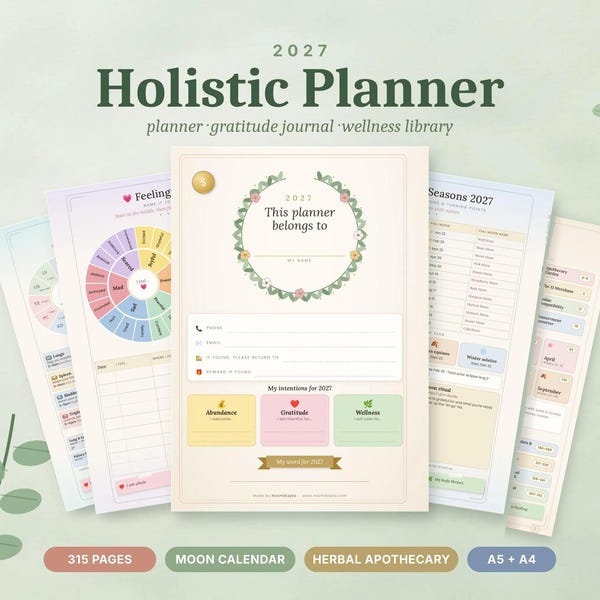
Holistic Planner 2027
A printable A5 planner for body and soul – mood and habit tracker, gratitude journal and herbal apothecary pages.
Which tea is your go-to on a stressful day? Tag me #NoomiKajsa 🌼