
Deep inside your body runs a long, wandering nerve that connects your brain with your heart, lungs and gut. It is called the vagus nerve – from the Latin word for “wandering” – and it plays a big role in how quickly you can calm down after stress. Think of it as your body’s own calm button. 💗
What is the vagus nerve?
The vagus nerve is the longest of the cranial nerves. It runs from the brainstem, past the throat and voice box, down to the heart, lungs, stomach and intestines. It is the main nerve of the parasympathetic nervous system – the “rest and digest” system that balances the “fight or flight” stress response.
Most of its fibres send messages from the body to the brain. That means how you breathe, move and feel in your body can actually tell your brain whether you are safe.
What it helps with
- Heart rate – it slows the heart down after stress
- Breathing – calm, deep breaths are linked to vagal activity
- Digestion – stomach acid, gut movement and appetite
- The gut–brain connection – messages between your gut and your mood
- Calming inflammation – researchers study the so-called “inflammatory reflex”
- Social connection – it is linked to the muscles of the face, voice and hearing
Vagal tone – the nerve’s fitness
Scientists talk about “vagal tone” – how well the vagus nerve works. One way to estimate it is heart rate variability (HRV): the small natural changes in time between heartbeats. Higher HRV is generally linked with a body that can switch more easily between activity and rest. Many smartwatches measure HRV.
10 gentle ways to support your vagus nerve
- Slow breathing with a long out-breath – for example 4 seconds in, 6–8 seconds out. See my breathing techniques.
- Humming, singing and chanting – the vagus nerve passes the vocal cords, and the vibration is soothing.
- Gargling water for 30 seconds in the morning and evening.
- Cold water on the face – splash your face or hold a cool cloth over your eyes and cheeks for 30 seconds.
- Laughter and connection – time with people who make you feel safe.
- Gentle movement – walking, yoga, tai chi and stretching.
- Meditation and yoga nidra.
- A happy gut – fibre and fermented foods. Read about prebiotics and probiotics.
- Omega-3 – studies link omega-3 with higher HRV. Read more in EPA and DHA.
- Good sleep – the nervous system restores itself at night.
A 2-minute vagus reset
Sit comfortably. Put one hand on your chest and one on your belly. Breathe in through your nose for 4… and out slowly through pursed lips for 8, as if blowing on hot tea. Repeat 6 times. Then hum softly on the out-breath 3 times. Notice how your shoulders drop.
Acupuncture and the vagus nerve
Researchers are studying how acupuncture and stimulation of points on the ear may influence the vagus nerve, since one of its branches reaches the outer ear. Read more in my post on ear acupressure.
🛍️ From my Etsy shop
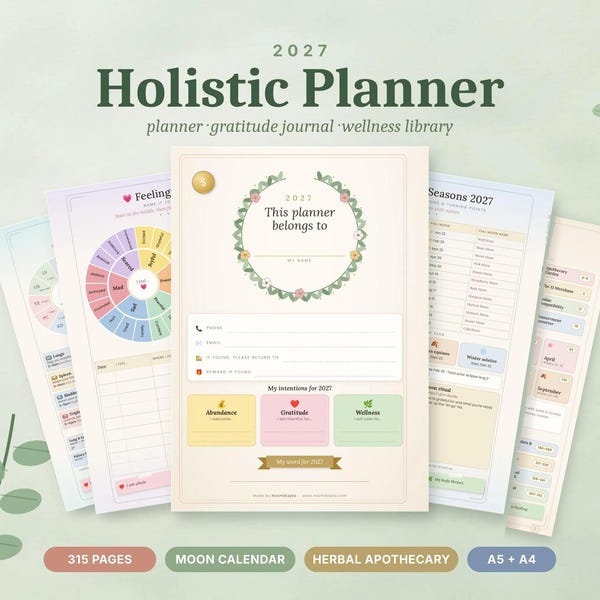
Holistic Planner 2027
A printable A5 planner for body and soul – with habit tracker for your daily calm practices.
Which calm button works best for you? Tag me #NoomiKajsa 💗
Read more: Sleep and Anxiety · Healing Frequencies · What Is Anxiety?