
Imagine if your body had its own little recycling team – one that cleans up old, worn-out parts of your cells and turns them into fresh building blocks and energy. It does! It is called autophagy, and it is one of the most exciting topics in longevity research today. ♻️
What is autophagy?
The word comes from Greek: auto means “self” and phagein means “to eat” – so autophagy literally means “self-eating”. It sounds dramatic, but it is a completely natural and healthy process. Inside every cell, small “bubbles” called autophagosomes collect damaged proteins, worn-out cell parts and other waste, and carry them to the lysosomes – the cell’s recycling stations. There everything is broken down and reused.
In 2016, the Japanese scientist Yoshinori Ohsumi received the Nobel Prize in Physiology or Medicine for discovering how autophagy works. Since then, interest has exploded.
Why autophagy matters
- Cellular spring cleaning – removes damaged proteins and old mitochondria (the cells’ power plants).
- Energy in hard times – when food is scarce, the body recycles its own parts for fuel.
- Defence – helps the body clear some bacteria and viruses from inside cells.
- Healthy ageing – autophagy naturally slows down with age, and researchers are studying its role in ageing, brain health, the heart and metabolism.
What turns autophagy on?
Autophagy is always running at a low level, but it increases when the body experiences mild, healthy stress – especially when nutrients are low.
1. Time between meals
When we stop eating for a while, insulin falls and an energy sensor in our cells called AMPK switches on, while a growth signal called mTOR switches down. That is a signal to clean up and recycle. In animal studies autophagy rises noticeably after around 16–24 hours without food. In humans it is harder to measure, so we don’t yet know the exact number of hours.
2. Movement
Exercise – especially endurance training and brisk walking – stimulates autophagy in muscles, the heart and even the brain.
3. Deep sleep
During sleep the brain clears away waste through the glymphatic system, and autophagy is part of the night-time repair work. Yet another reason to protect your sleep.
4. Gentle heat and cold
Sauna and cold-water bathing – a Nordic favourite – are “hormetic” stressors: small, healthy challenges that may support the body’s repair systems. Research is still young here.
Gentle ways to support autophagy
Overnight fasting (12–14 hours)
The easiest place to start: finish dinner by 19:00 and have breakfast at 7–9 the next morning. Most of the fast happens while you sleep.
16:8 intermittent fasting
Eat within an 8-hour window – for example 11:00–19:00 – and drink water, herbal tea or black coffee the other 16 hours. Many people do this a few days a week rather than every day.
Early dinner
Eating your last meal earlier in the evening fits our body clock and supports both sleep and the overnight fast.
No snacking
Three proper meals with real breaks in between give the body time to switch from “storing” to “cleaning” mode.
Foods and drinks studied for autophagy
- Green tea – rich in EGCG, a plant compound studied for autophagy.
- Coffee – both regular and decaf have been linked to autophagy in animal studies (black, without milk and sugar during the fast).
- Turmeric – curcumin is one of the most studied plant compounds.
- Spermidine-rich foods – wheat germ, mushrooms, soybeans, green peas, aged cheese and broccoli.
- Berries, grapes and red onions – full of polyphenols like resveratrol and quercetin.
- Olive oil – extra virgin olive oil contains polyphenols linked to cellular health.
- Ginger and cinnamon – warming spices that are lovely in tea during a fasting window.
Note that most of this research has been done in cells and animals. These foods are healthy anyway – think of autophagy as a bonus.
What breaks a fast?
Anything with calories – especially sugar, milk and protein – tells the body food has arrived. Water, sparkling water, unsweetened herbal tea and black coffee or plain tea are generally fine.
A gentle autophagy-friendly day
- 07:00 – a big glass of water and a cup of green tea, a walk in the morning light.
- 11:00 – first meal: eggs or yoghurt with berries, nuts and seeds.
- 15:00 – a colourful lunch with greens, beans or fish and olive oil.
- 18:30 – an early, light dinner with vegetables and mushrooms.
- 19:00 → – herbal tea only, phone away, and early to bed.
What does science really say?
Autophagy is real, important and well documented in cells and animals. But in humans it is still difficult to measure, and there is no simple test to tell you “your autophagy is on now”. Claims that fasting “cures” disease or “reverses ageing” go far beyond the evidence. What we do know is that regular movement, good sleep, a plant-rich diet and not eating around the clock are good for us in many ways – and they are also the best-known ways to support your body’s own cleaning system.
FAQ
Do I need to fast for days to get autophagy?
No. Long fasts are not necessary for most people and can be risky. Gentle daily habits – a 12–16 hour overnight break, movement and sleep – are a safe and sustainable start.
Will I lose muscle?
Short daily fasts with enough protein in your meals and some strength training help protect your muscles.
Can I drink coffee while fasting?
Yes – black coffee or plain tea is generally fine. Skip milk, sugar and “fasting creamers”.
Is autophagy the same as detox?
In a way – it is the body’s own cleaning system inside the cells, which is why I love it more than any detox product. Read more in my post about gentle everyday detox.
🛍️ From my Etsy shop
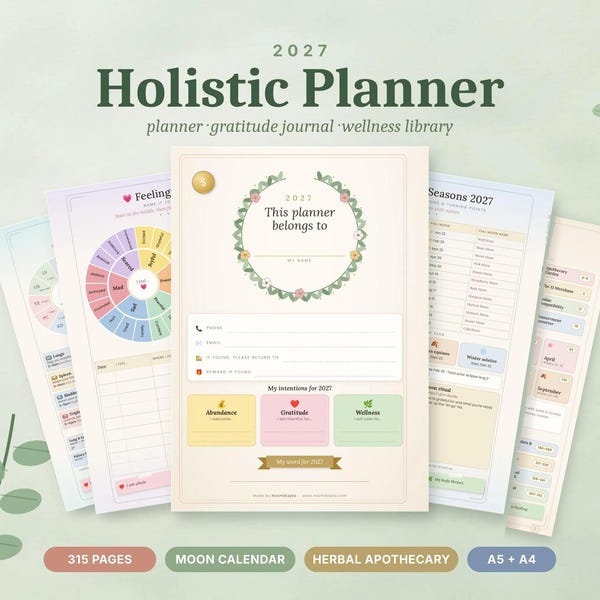
Holistic Planner 2027
A printable A5 planner for body and soul – with habit tracker, mood tracker and gratitude pages to follow your new routines.
Have you tried intermittent fasting? Tag me #NoomiKajsa ♻️
Read more: Gentle Everyday Detox · A Gentle Evening Routine for Deep Sleep · Medicinal Mushrooms