
When we think of vitamin C, most of us think of oranges. But did you know that some berries contain 30–60 times more? 🍊
Vitamin C supports the immune system, helps the body make collagen for skin and joints, helps us absorb iron and works as a powerful antioxidant. Our body cannot make it or store much of it – so we need a little every day.
The natural vitamin C champions
Approximate amounts per 100 g – they vary with harvest and processing.
- Kakadu plum (Australia) – up to 3,000–5,000 mg. The world record holder.
- Camu camu (Amazon) – around 2,000–3,000 mg. A sour little berry, usually sold as powder.
- Acerola cherry (Caribbean & South America) – around 1,500–1,700 mg. Lovely fruity taste; also sold as powder and chewable tablets.
- Rosehip – around 400–1,200 mg. Our own Nordic treasure – it grows along the coast here on Bornholm! 🌹
- Sea buckthorn (havtorn) – around 200–900 mg. Bright orange, tangy and very Nordic.
- Blackcurrant (solbær) – around 180 mg.
- Red bell pepper & kale – around 120–130 mg.
- Kiwi – around 90 mg. Still more than an orange (around 50 mg)!
How to use the powders
- Acerola or camu camu powder: start with ¼–½ teaspoon a day in a smoothie, yoghurt, juice or water. Just ½ teaspoon can cover your daily need many times over.
- Don’t heat it – vitamin C is sensitive to heat, light and air. Add it after cooking.
- Store in a dark, tightly closed jar.
My rosehip tip
Pick rosehips in the autumn after the first frost, cut them open, remove the seeds and hairs, and dry them for tea – or make rosehip soup or jam. Free vitamin C straight from nature!
How much do we need?
Adults need around 75–110 mg a day. More is not always better: above about 2,000 mg a day, many people get an upset stomach.
Why vitamin C matters
- Immune system: helps white blood cells do their job.
- Skin and joints: needed to build collagen.
- Iron: helps the body take up iron from plants – lovely with beans, lentils and greens.
- Antioxidant: protects cells from everyday wear and tear.
- Energy: low vitamin C can make us feel tired and low.
Food first
A colourful plate gives you plenty of vitamin C: a red bell pepper, a kiwi and a handful of berries cover most people’s daily need. Powders are a nice extra in winter, when fresh produce is less varied.
Keep the vitamin C in your food
- Eat fruit and vegetables raw or lightly steamed.
- Cut them just before eating – vitamin C fades when exposed to air.
- Frozen berries are picked at their best and keep their vitamin C well.
A rosehip & sea buckthorn winter smoothie
Blend 1 banana, a handful of frozen sea buckthorn or mango, 1 tsp rosehip powder, ½ tsp acerola powder, a little ginger and a glass of oat milk. Bright orange sunshine in a glass! 🍊
🛍️ From my Etsy shop
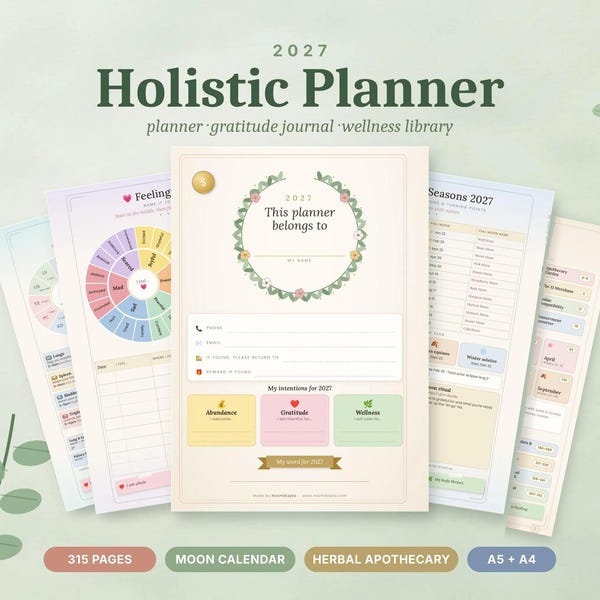
Holistic Planner 2027
A printable A5 planner for body and soul – mood and habit tracker, gratitude journal and herbal apothecary pages.
What is your favourite vitamin C food? Tag me #NoomiKajsa 🍊
Read more: Manuka Honey 101 · Fuel & Food