Acupuncture has been used in China for more than 2,000 years. Today it’s offered in clinics and even hospitals all over the world. But how can tiny needles make a difference? Let’s look at both the traditional and the modern explanations. 📍
The traditional view
In Chinese medicine, health depends on the smooth flow of Qi (vital energy) and blood through channels called meridians. Pain and illness are seen as blockages or imbalances. Needling specific points helps restore flow and balance. Read The Meridians and Acupuncture – The Basics.
What modern research suggests
- Nerve stimulation – needles stimulate nerves in skin and muscle, sending signals to the spinal cord and brain.
- Natural painkillers – acupuncture is linked to the release of endorphins and other pain-modulating substances.
- Brain activity – brain scans show acupuncture can change activity in areas that process pain and emotion.
- The nervous system – it may shift the body towards “rest and digest”. Read The Vagus Nerve.
- Local effects – increased blood flow and changes in connective tissue around the needle.
What is it used for?
Research is strongest for chronic pain – such as back and neck pain, osteoarthritis of the knee, tension headaches and migraine – and for nausea. It’s also widely used for stress, sleep, period pain and fertility support.
What to expect
Very thin, sterile, single-use needles are placed in points on the body. Most people feel a light prick or a dull, heavy sensation, then deep relaxation. A treatment usually lasts 30–60 minutes.
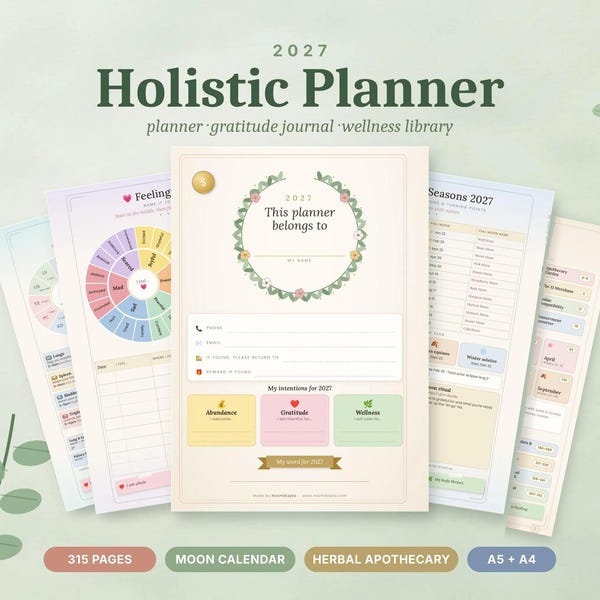
🛍️ From my Etsy shop
Holistic Planner 2027
A printable A5 planner for body and soul – track your treatments and how you feel.
Tag me #NoomiKajsa 📍
Read more: Ear Seeds · Cupping · Battlefield Acupuncture